4 hr
Sunrise Hike to Indian Nose (Nariz del Indio)
- Entry ticket
- Mobile voucher
- Valid same day
- Free cancellation
Indian Nose Sunrise Hike from Santa Cruz — Summit Departures & Reserved Slots
Ascend before dawn, witness three volcanoes ignite at first light
Compare fares, pick the fit — all bookings are mobile-voucher and eligible for free cancellation where shown.
4 hr
6 hr
6 hr
Selecting the right indian nose sunrise hike from santa cruz allows you to navigate the rugged caldera trails safely before dawn. These specialized tours ensure you reach the summit during the optimal morning hours for the best visibility of the Mayan Face landmark.
|
Top pick Summit Sunrise Hike (Guided Hike) |
Expanded Highland Tour (Guided + Transfer) | |
|---|---|---|
| View/Access | Summit overlook | Summit plus cave area |
| Height/Areas included | Indian Nose summit | Summit plus cave exploration |
| Access method | Guided hike | Guided hike with transfer |
| Wait time | Timed arrival window | Timed pickup window |
| What's included | Guide; hike | Guide; hike; cave visit |
| Best for | First-timers | Extended highland sightseeing |
| See tickets & prices |
Verdict: For most visitors, the standard summit indian nose sunrise hike from santa cruz tour provides the most reliable way to witness the morning light over Lake Atitlán.
Worth it for sunrise seekers and landscape photographers
The indian nose sunrise hike from santa cruz delivers one of Lake Atitlán's most dramatic viewpoints at a modest 30 GTQ trail conservation fee. The pre-dawn climb—typically starting around 04:30 from Santa Clara La Laguna—takes roughly 45 minutes through forested switchbacks before opening onto a ridgeline summit that reveals the lake's three volcanoes in silhouette. Guided sunrise hike options from Panajachel and other lake towns bundle transport, local expertise, and early coordination, adding value if you're unfamiliar with the trailhead or prefer not to navigate alone in darkness. The daytime hiking experience offers the same vantage without the alarm clock, though morning mist often obscures the volcanic panorama by mid-morning. For photographers chasing golden light over San Pedro, Tolimán, and Atitlán volcanoes, or travelers who value uncrowded natural viewpoints over polished tourist infrastructure, the early wake-up and modest fee pay off. If you're averse to predawn starts or prefer cultural immersion over landscape photography, the local Indian inscription tour offers a different angle on the region's heritage without the climb.
Bottom line: If you're willing to set an early alarm, the summit rewards you with one of Guatemala's signature sunrise panoramas at a fraction of the cost of fly-over tours.
Indian Nose provides a shorter, more accessible summit for early panoramas, while Volcán San Pedro offers a rigorous, high-altitude challenge for experienced hikers.
|
Top pick Indian Nose |
Volcán San Pedro | |
|---|---|---|
| Difficulty | Moderate | Challenging |
| Ascent Time | 1–1.5 hours | 3–4 hours |
| Lake Visibility | Expansive, bird's-eye view | Elevated, side-angle view |
| Altitude | 2,860 m | 3,020 m |
| Crowd Levels | Moderate to high | Low to moderate |
| Trail Type | Well-maintained path | Steep, rugged forest terrain |
| See tickets & prices |
Verdict: Choose the indian nose sunrise hike from santa cruz tours for a quicker ascent with iconic crater lake vistas, or select Volcán San Pedro if you prefer a strenuous physical expedition. Those booking an indian nose sunrise hike from santa cruz tour will experience a faster climb, whereas securing indian nose sunrise hike from santa cruz tickets provides a more efficient schedule for travelers with limited time in the Lake Atitlán highlands.
Hand-picked experiences loved by thousands of travelers
4 hours
Free Cancellation
Midday trek to a stunning lakeside viewpoint with volcano panoramas and Mayan cultural insights
2 hours
Free Cancellation
Intimate 2-hour exploration of historic inscriptions with personalized attention in small groups
6.5 hours
Free Cancellation
Discover a matriarchal society led by women, craft sacred chocolate, and explore organic farming traditions
5 hours
Free Cancellation
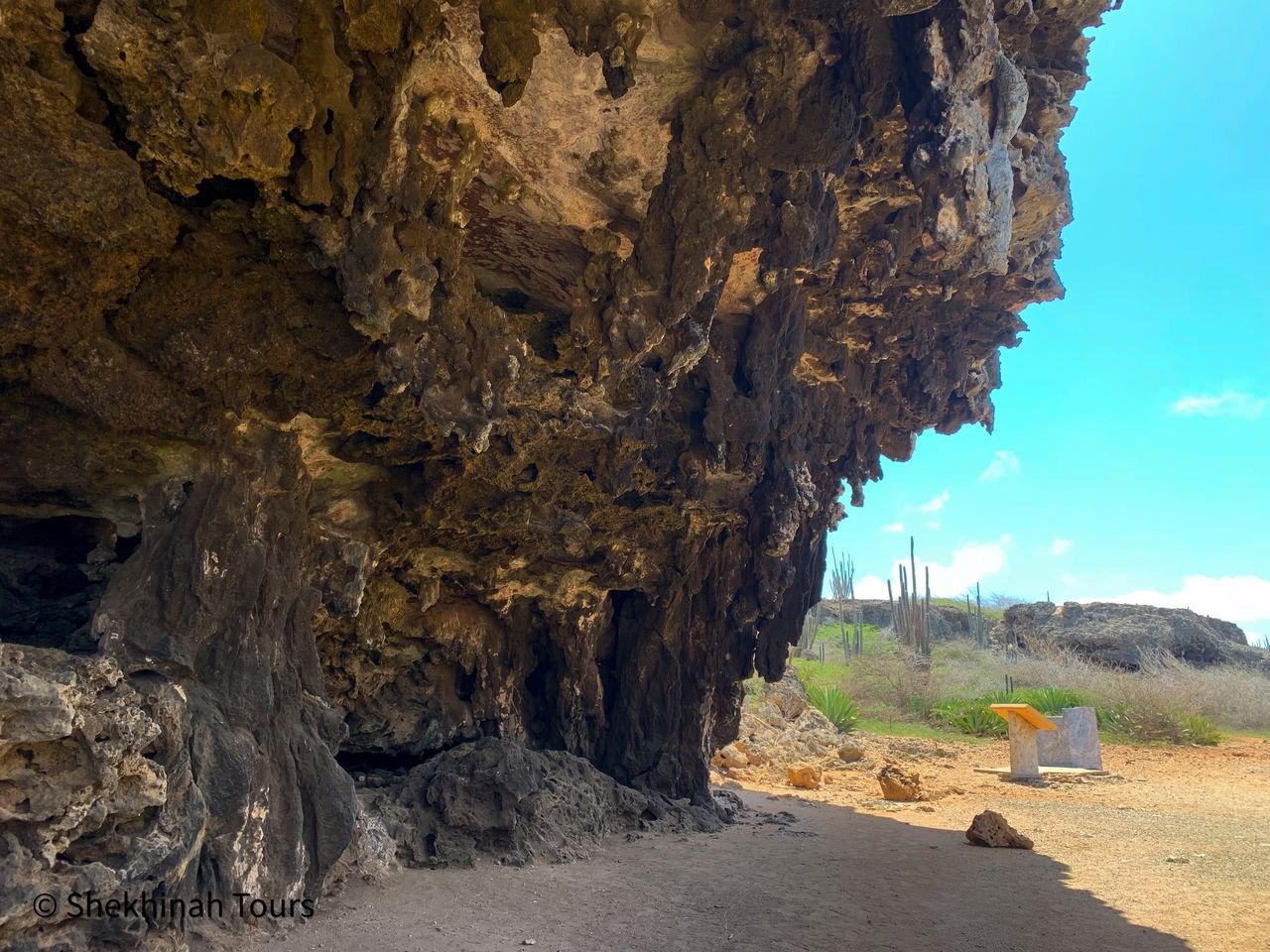
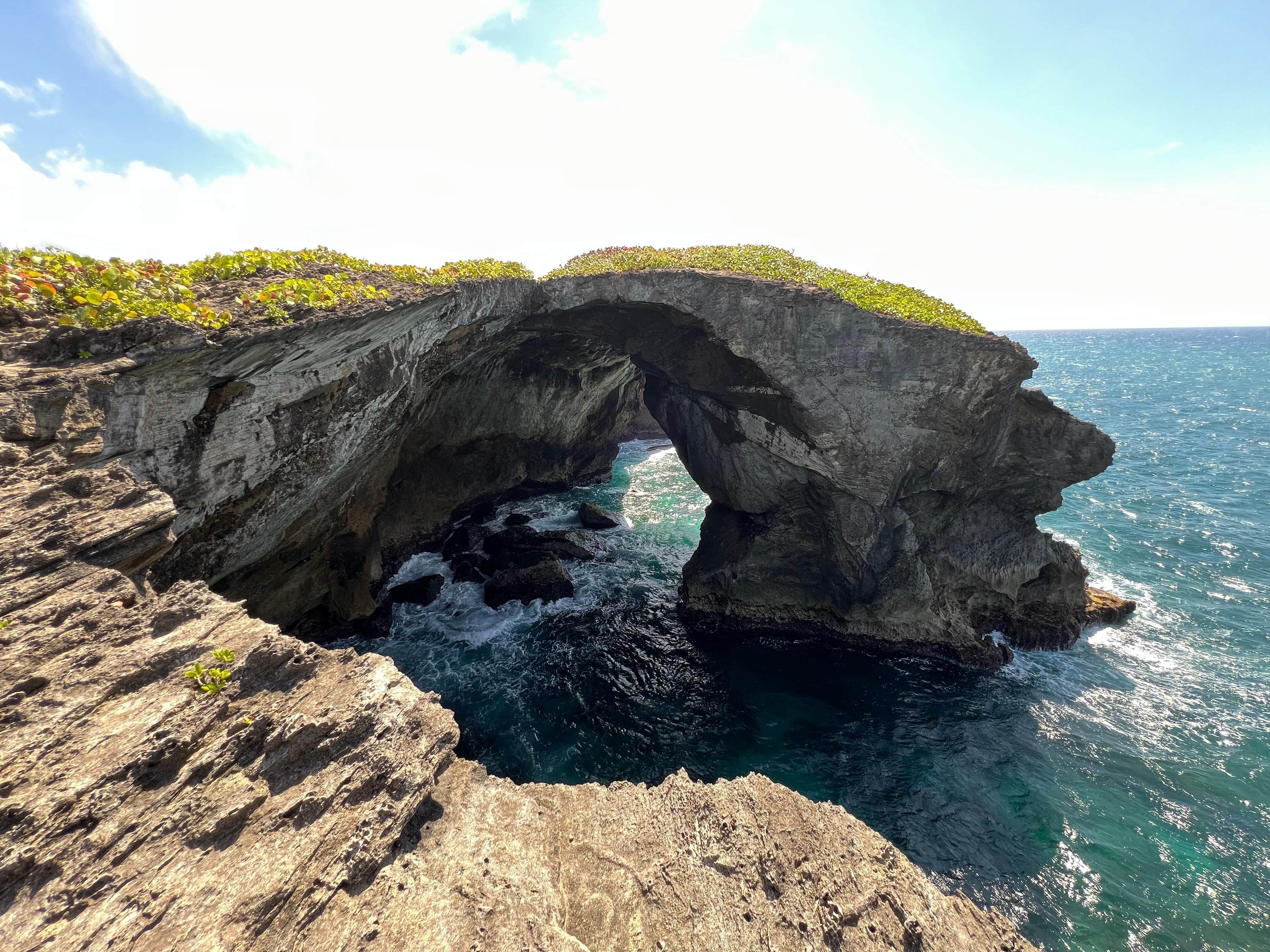
Discover ancient Taíno petroglyphs, taste local street food, and unwind on a tranquil Caribbean beach
2 hours
Free Cancellation
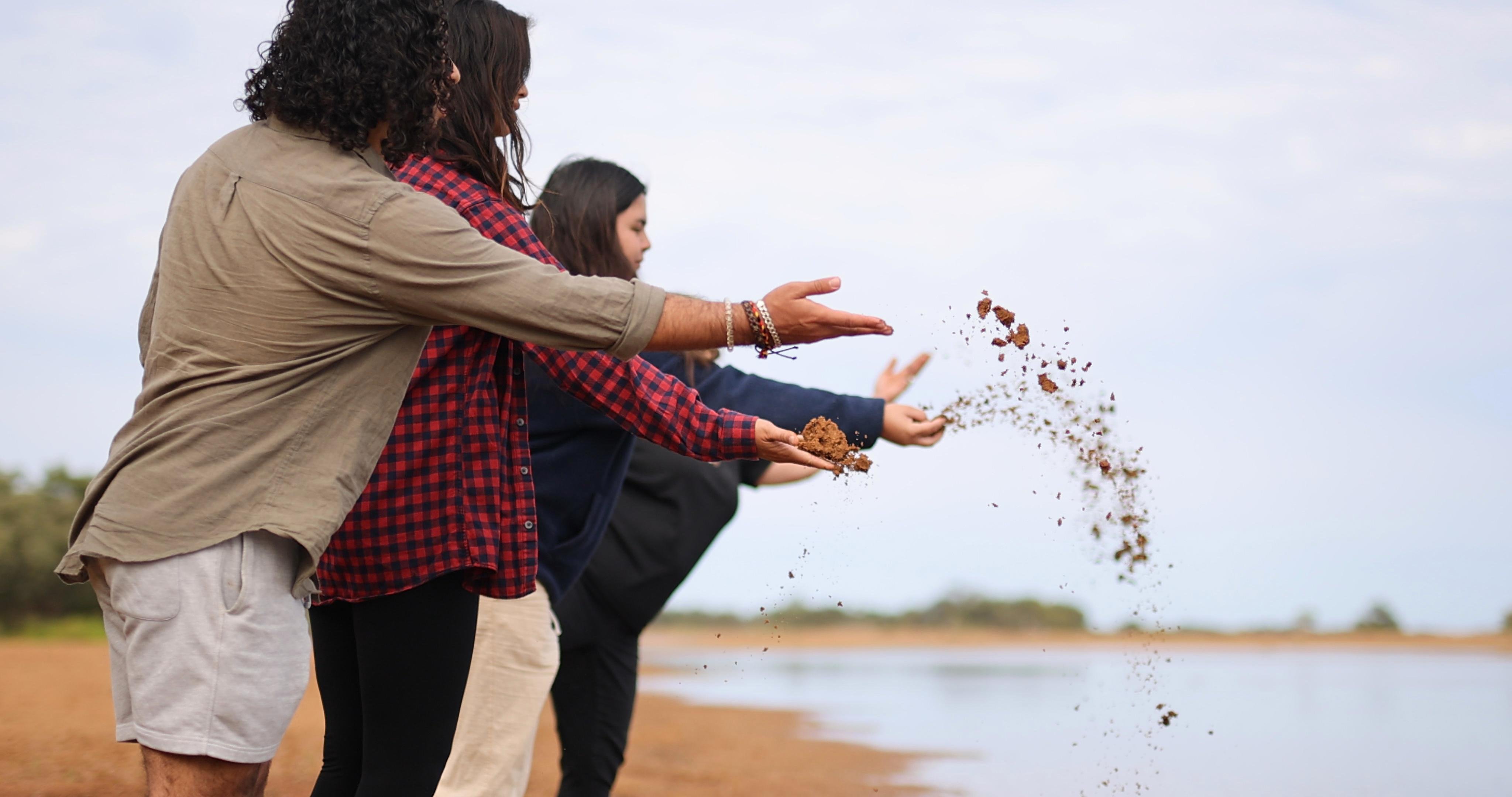
Walk ancestral trails with a Yinggarda guide, learning stories, bush medicine and food traditions
1.5 - 3 hours
Free Cancellation
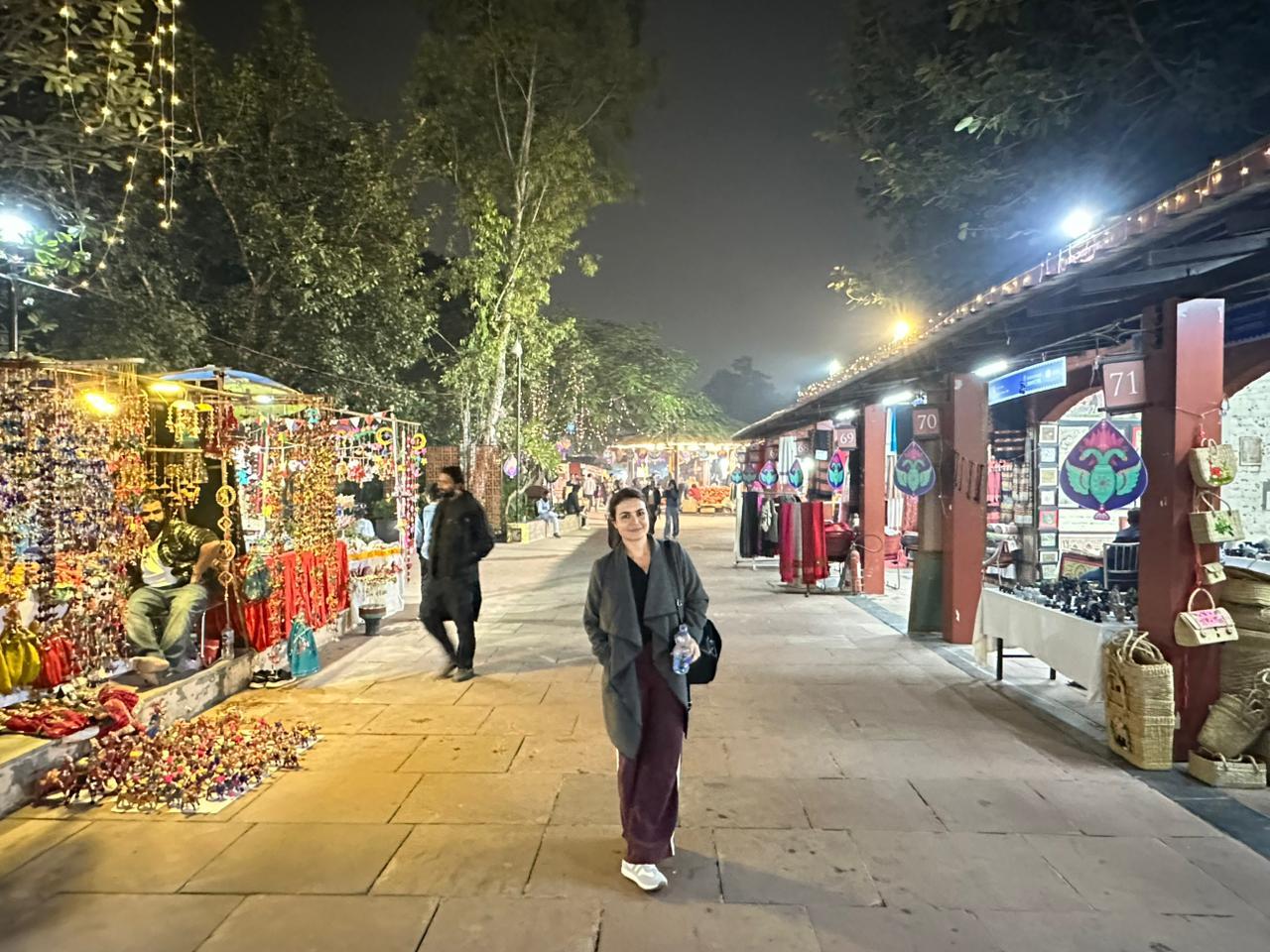
Discover India's artistic heritage and regional flavors at this vibrant open-air marketplace
Flexible dining duration
Free Cancellation
Savor traditional Indian cuisine in a culturally rich setting with a flexible dining credit
1 full day
Free Cancellation
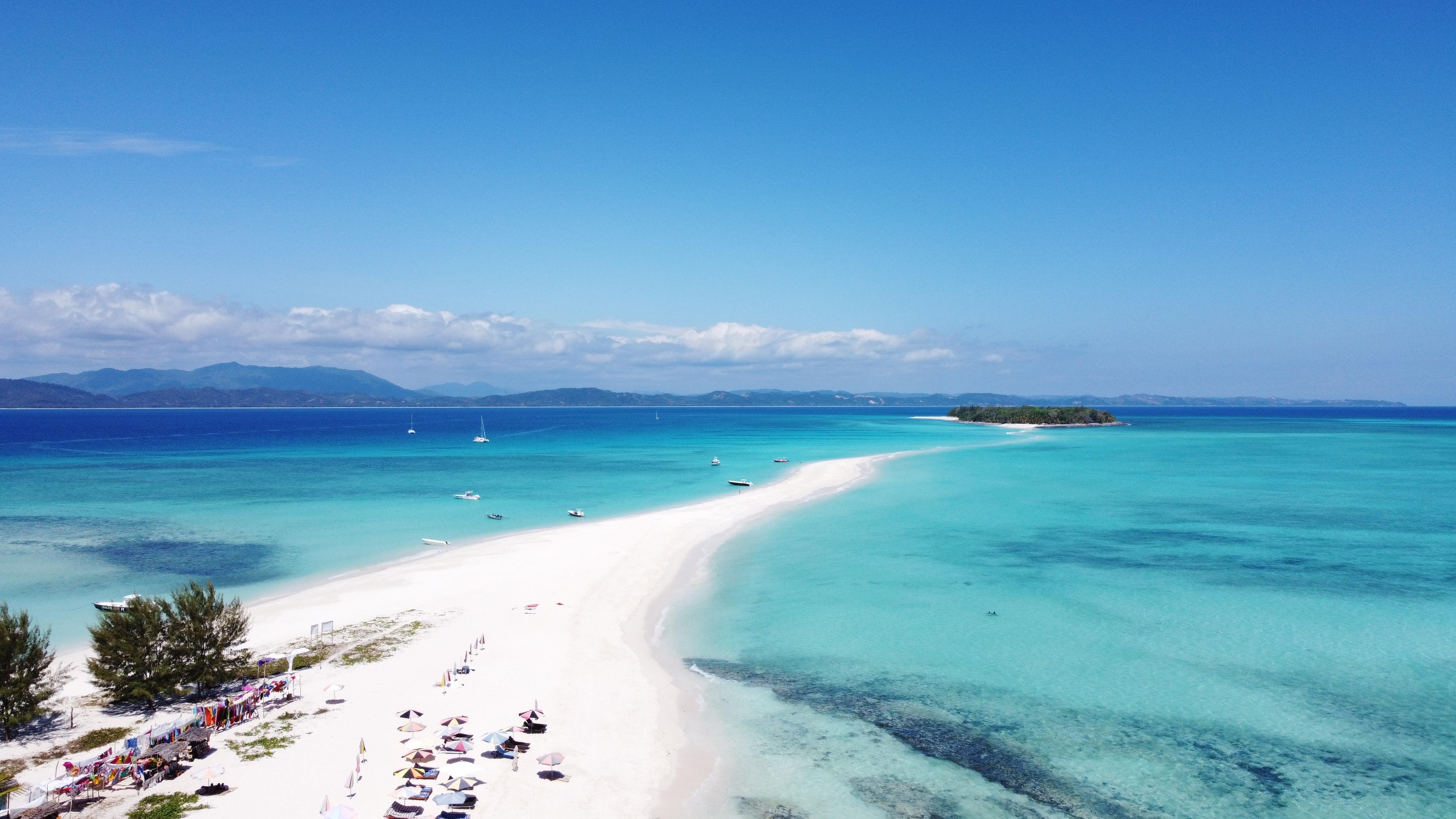
Discover Madagascar's pristine Turtle Island with white sands, turquoise lagoons, and a magical tidal sandbar
Check in at the gate and pay the conservation fee.
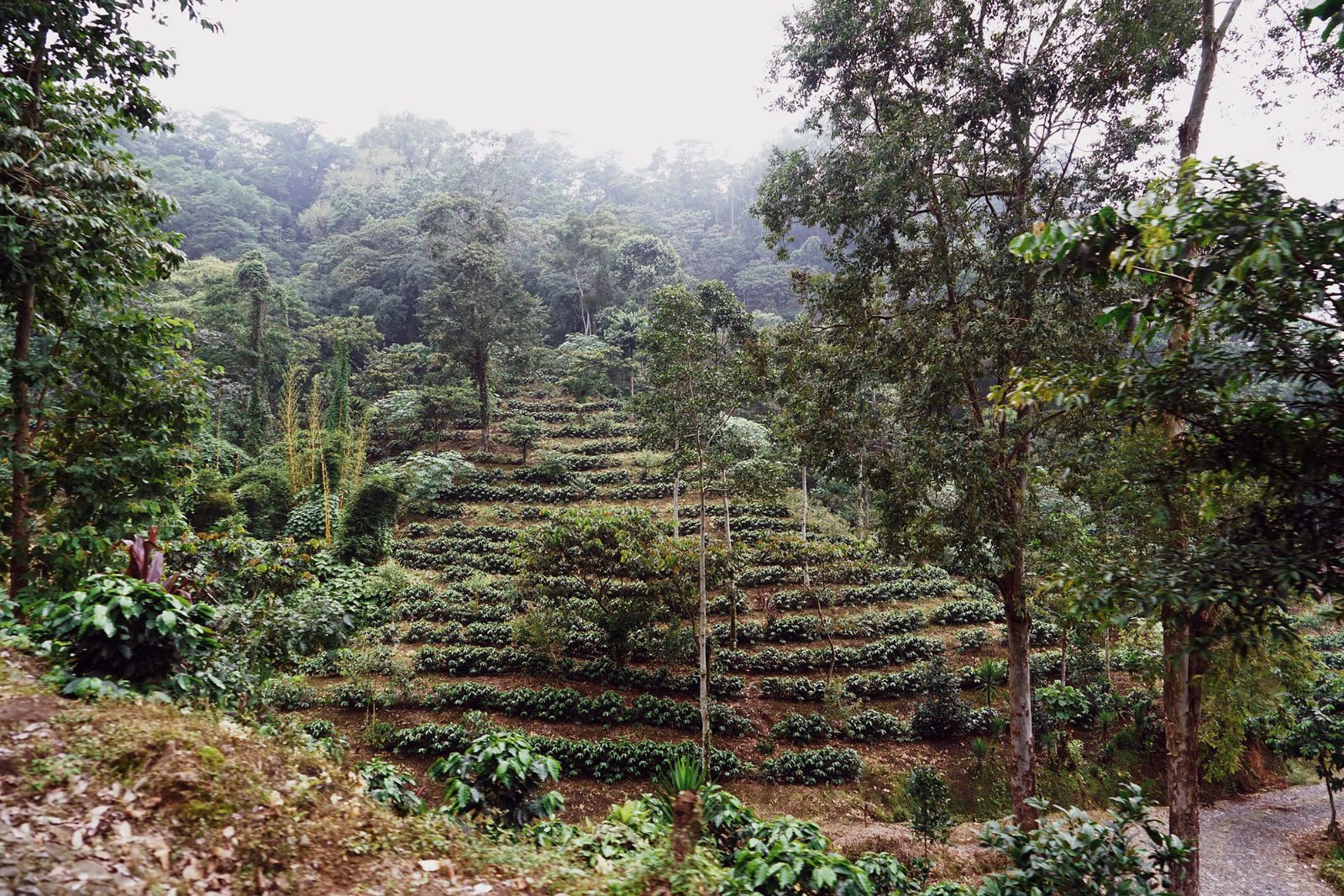
Navigate the switchbacks through local coffee plantations.
Wait for the first light at the peak viewpoint.
Follow the marked path back toward the Santa Clara exit.
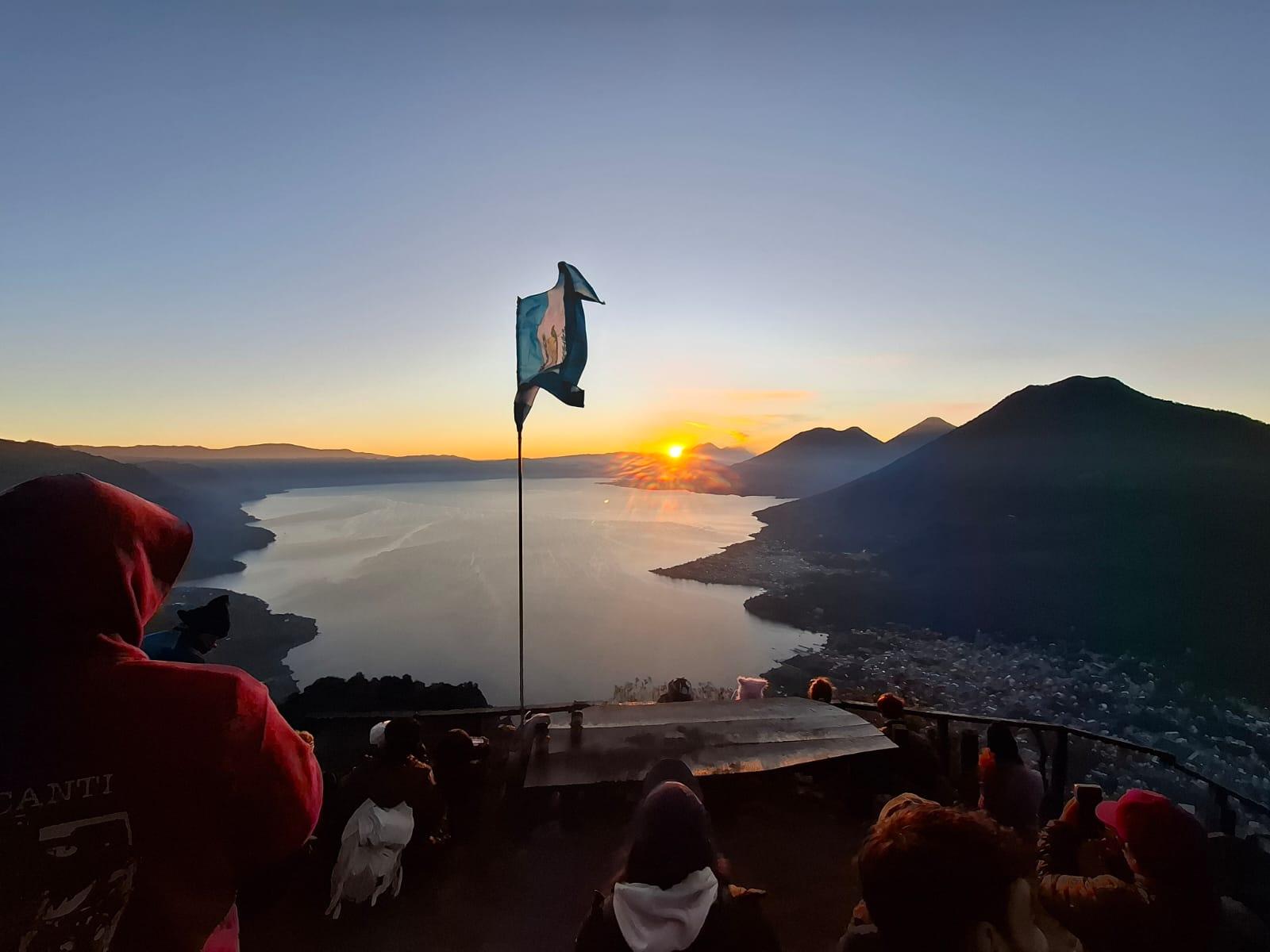
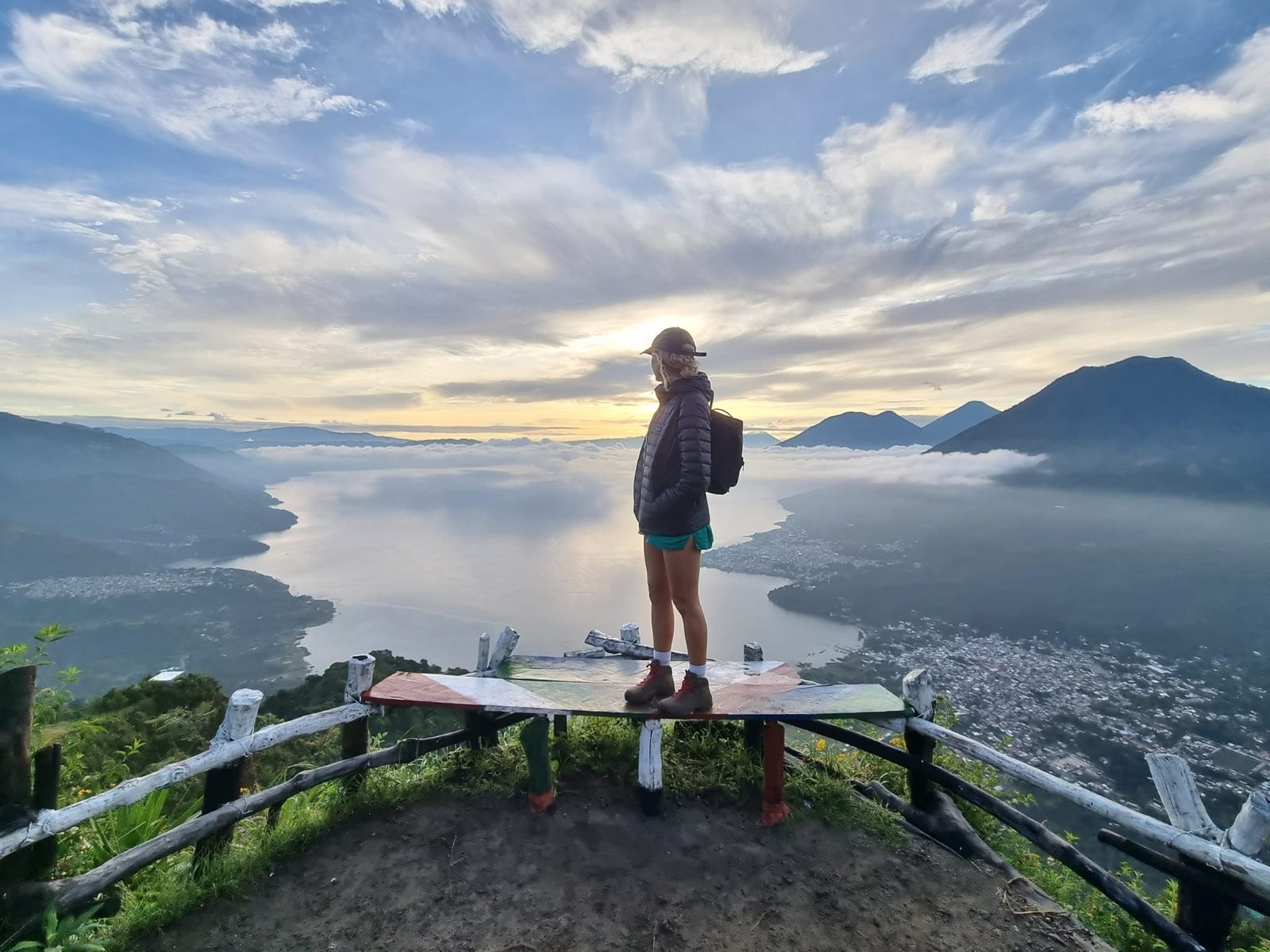
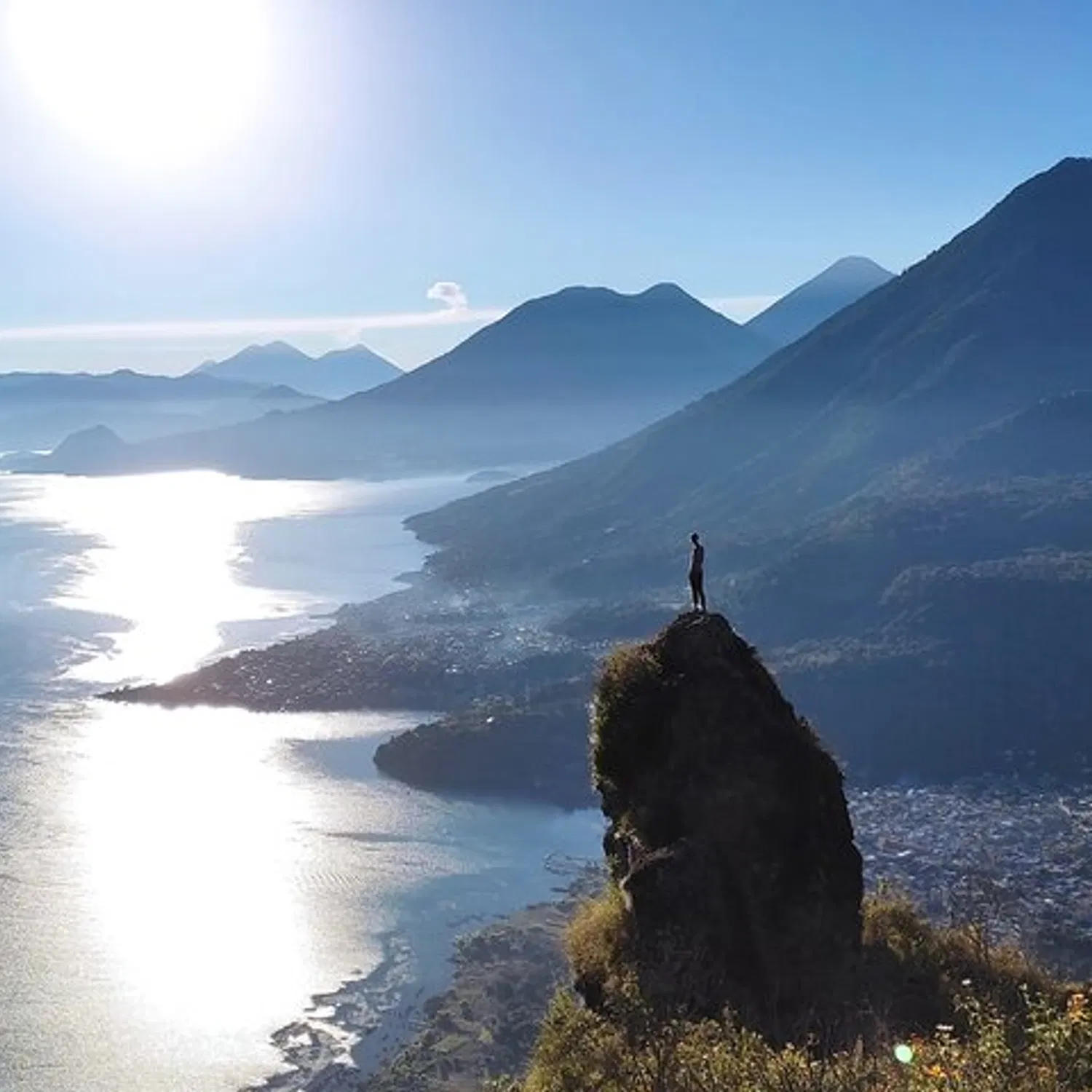
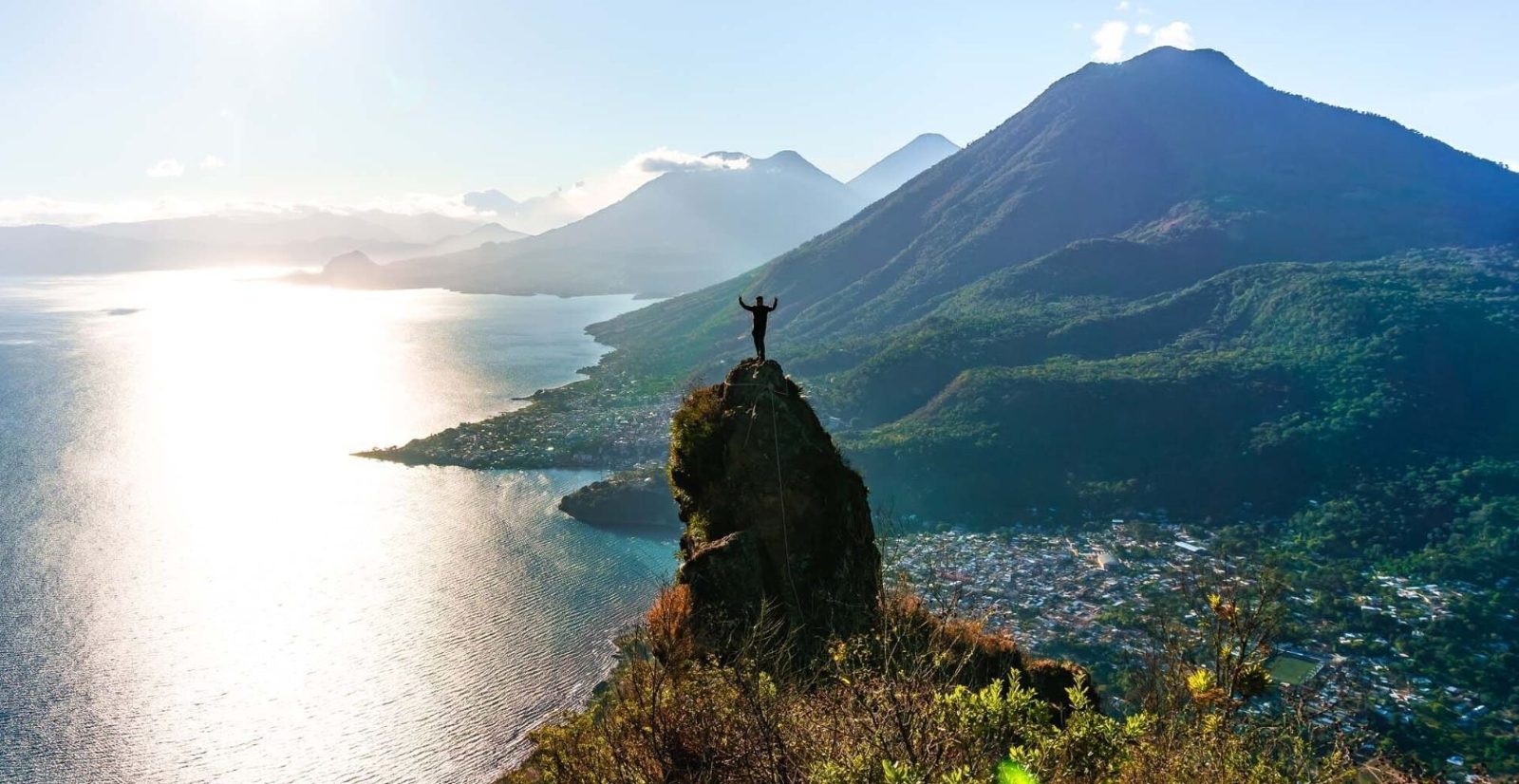
The highest point of the formation, shaped like a human profile. This is the primary location for viewing the sun rise over the volcanoes.
Sloped agricultural lands surrounding the base of the trail. The path passes through these local plots which sustain the regional economy.
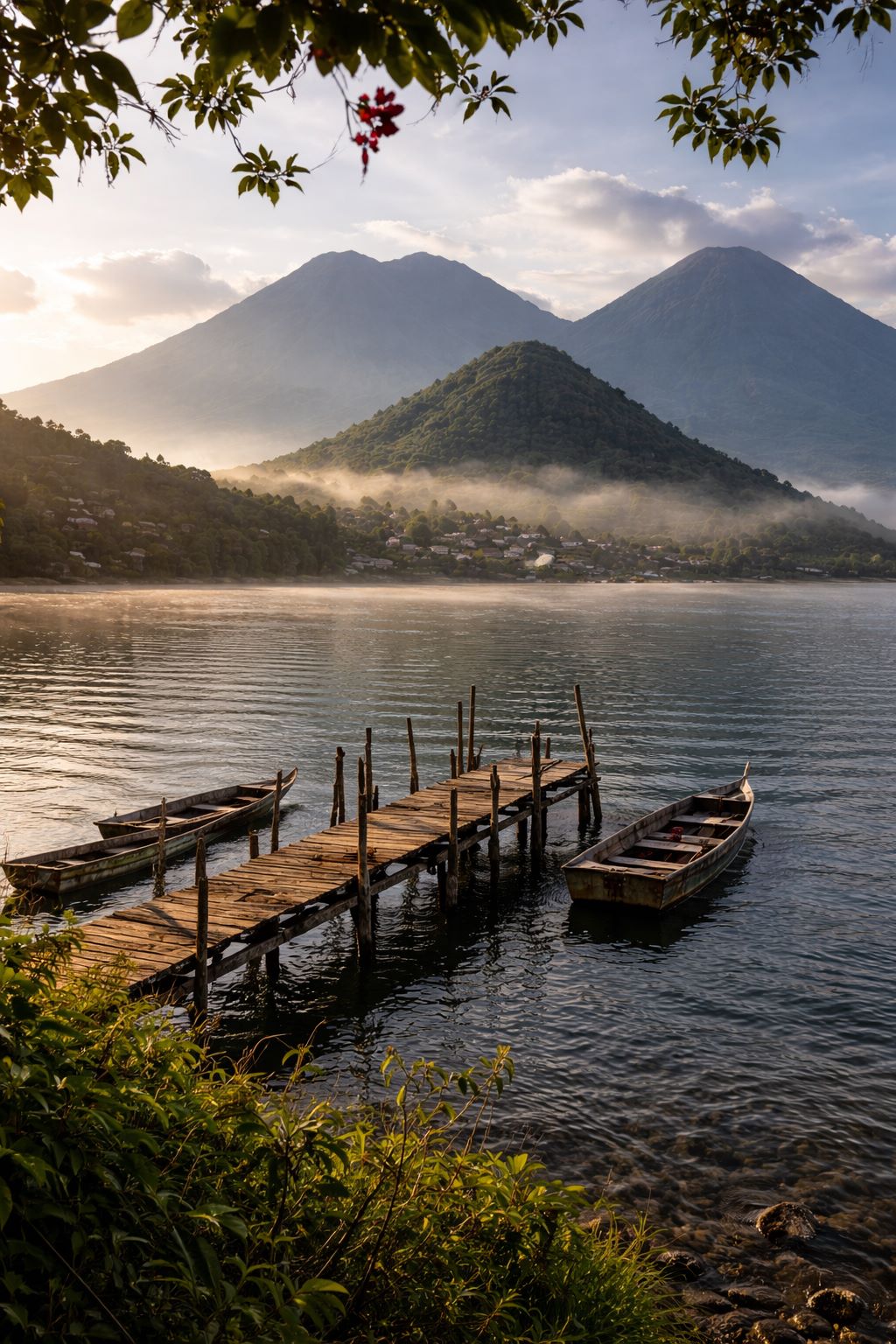
A distinct perspective of the Cerro de Oro volcano visible from the eastern summit path. It offers a unique angle compared to lake-facing views.
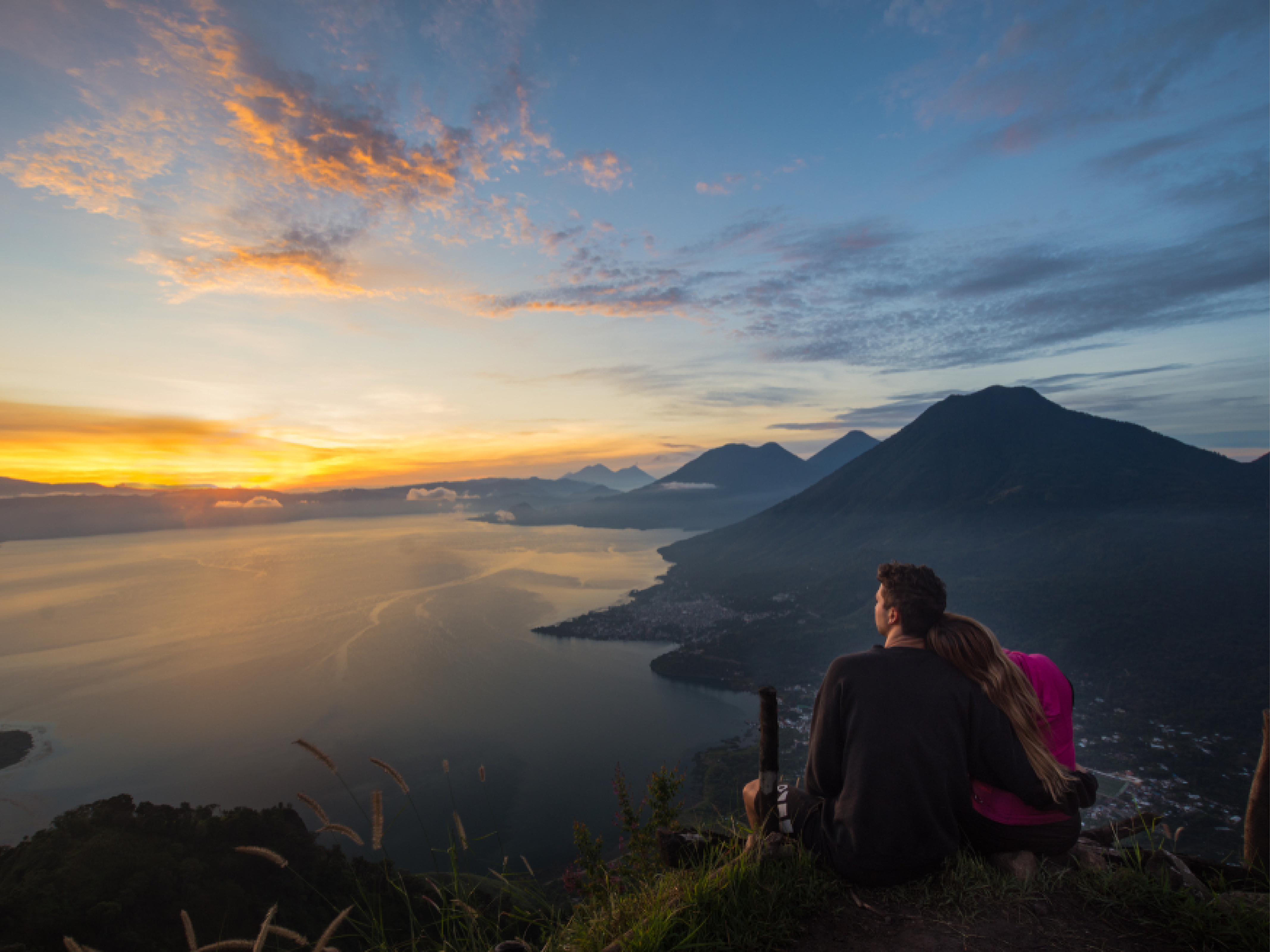
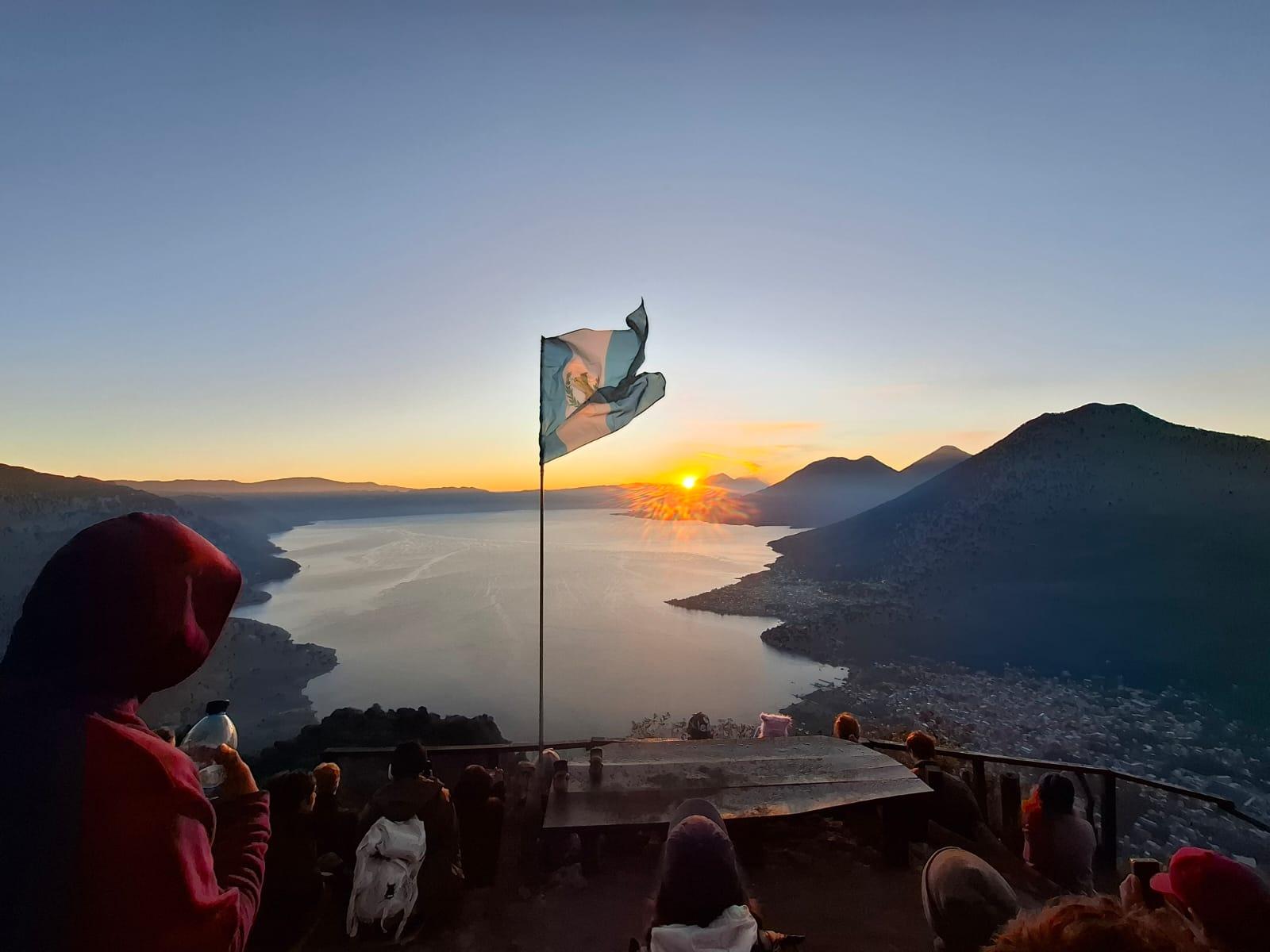
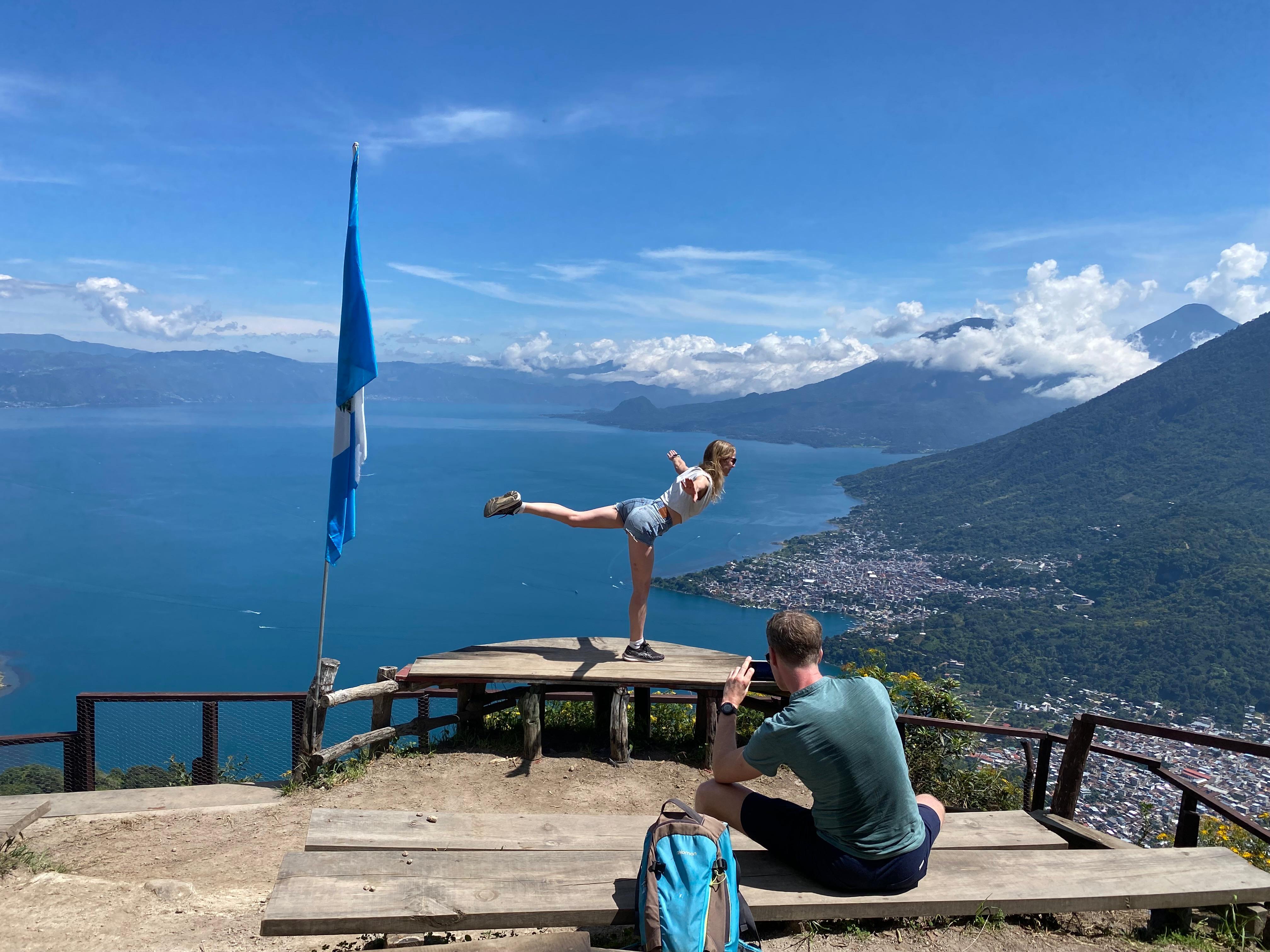
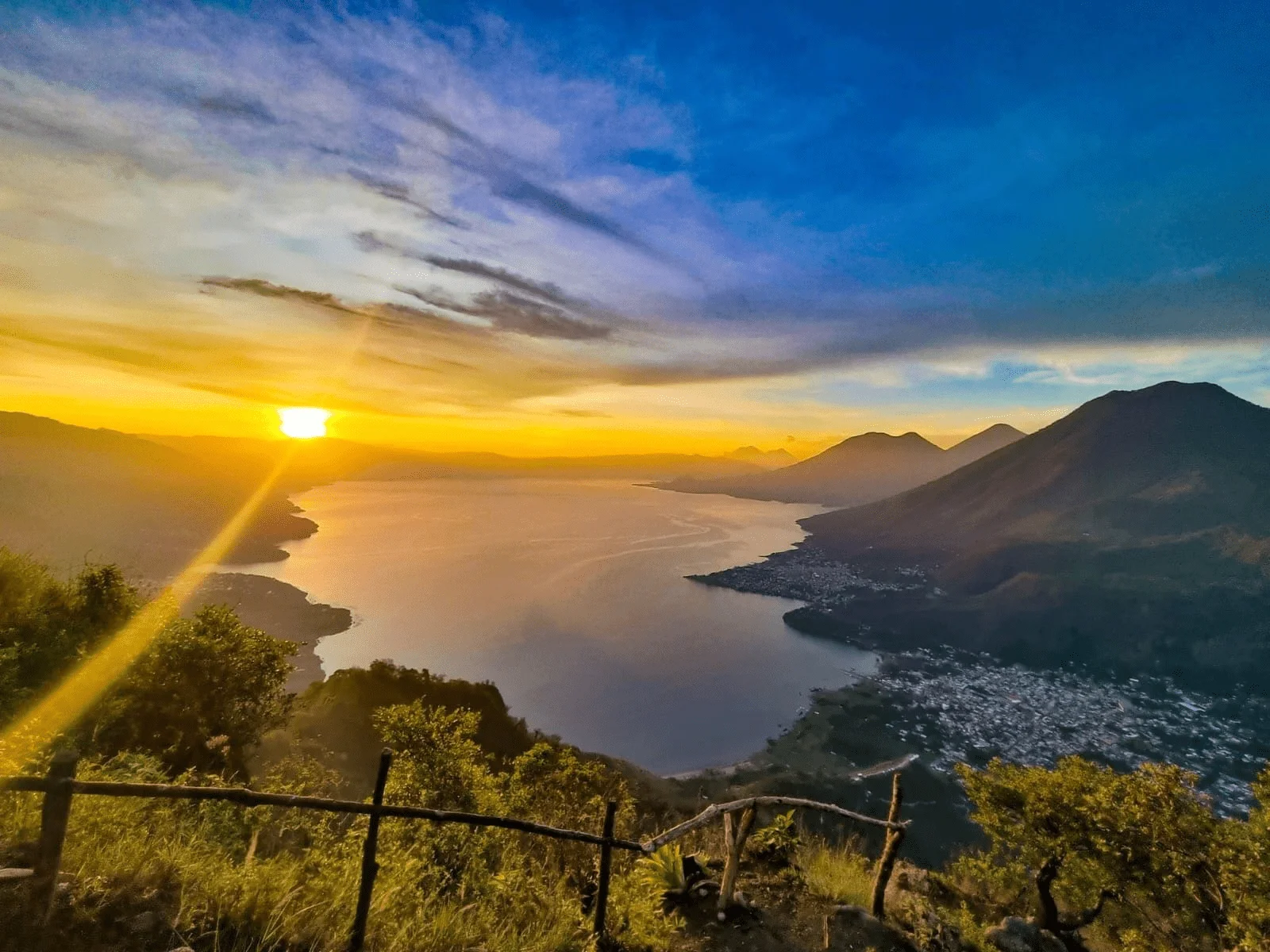
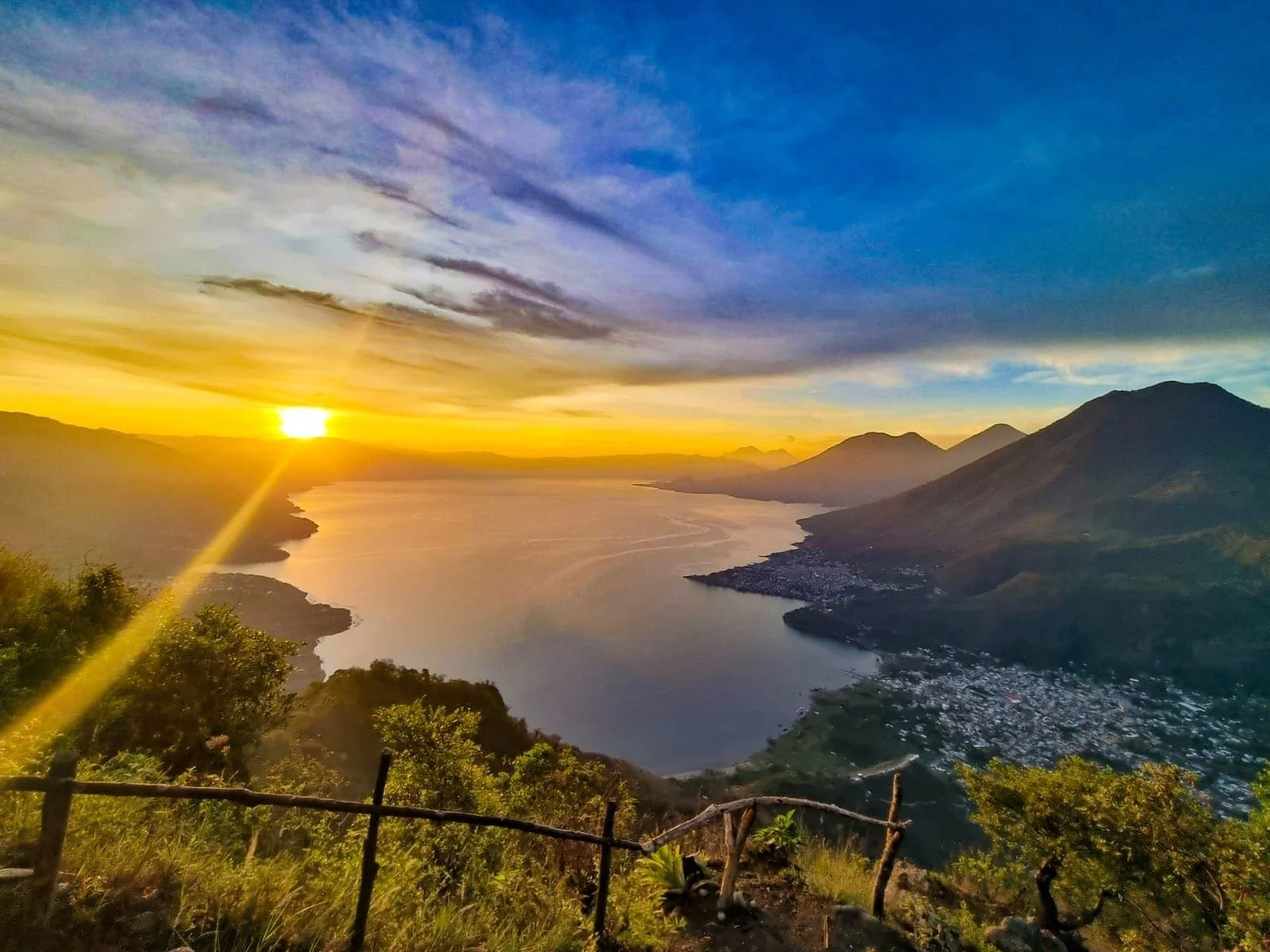
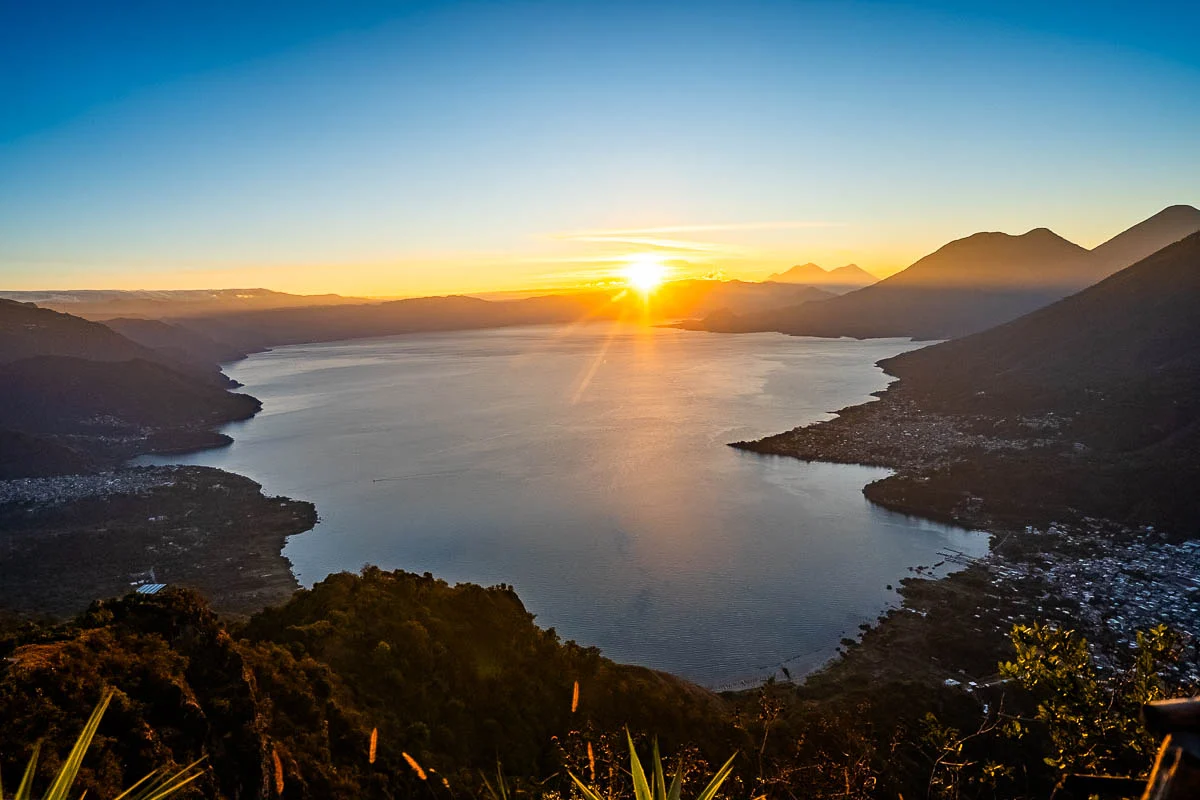
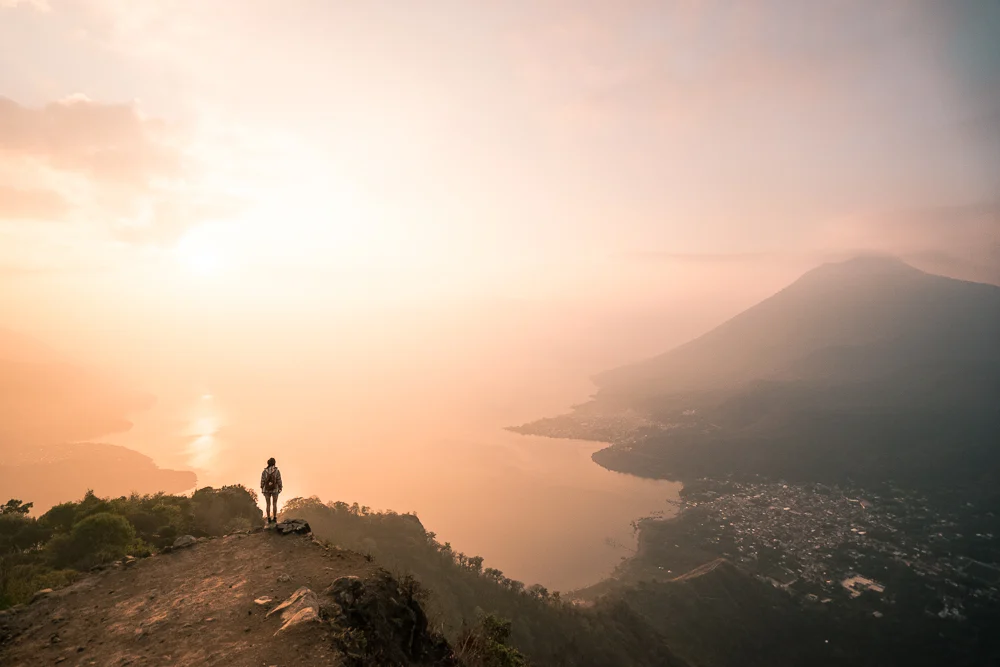
The panoramic view encompassing Lake Atitlán and the surrounding highlands. Visibility often extends toward the Pacific coast on clear mornings.
You leave Santa Cruz La Laguna before 04:30, boarding a lancha for the short crossing to Santa Clara under a sky still dense with stars. The boat docks at a wooden pier, and you follow your guide through the village's unlit streets, passing sleeping dogs and shuttered comedores.
At the trailhead, you pay the 30-quetzal conservation fee and begin the ascent, your headlamp beam catching the edges of stone steps and gnarled tree roots.
The first section threads through cornfields and small shrines, the air cool and sharp with pine resin. After 20 minutes, the gradient steepens, and you climb a series of switchbacks cut into the hillside. Your breathing becomes rhythmic, synced to the cadence of your footfall. Around you, the forest thins, replaced by low scrub and exposed volcanic rock. The trail narrows to a single-file ridgeline, handrails appearing where the drop-off becomes pronounced.
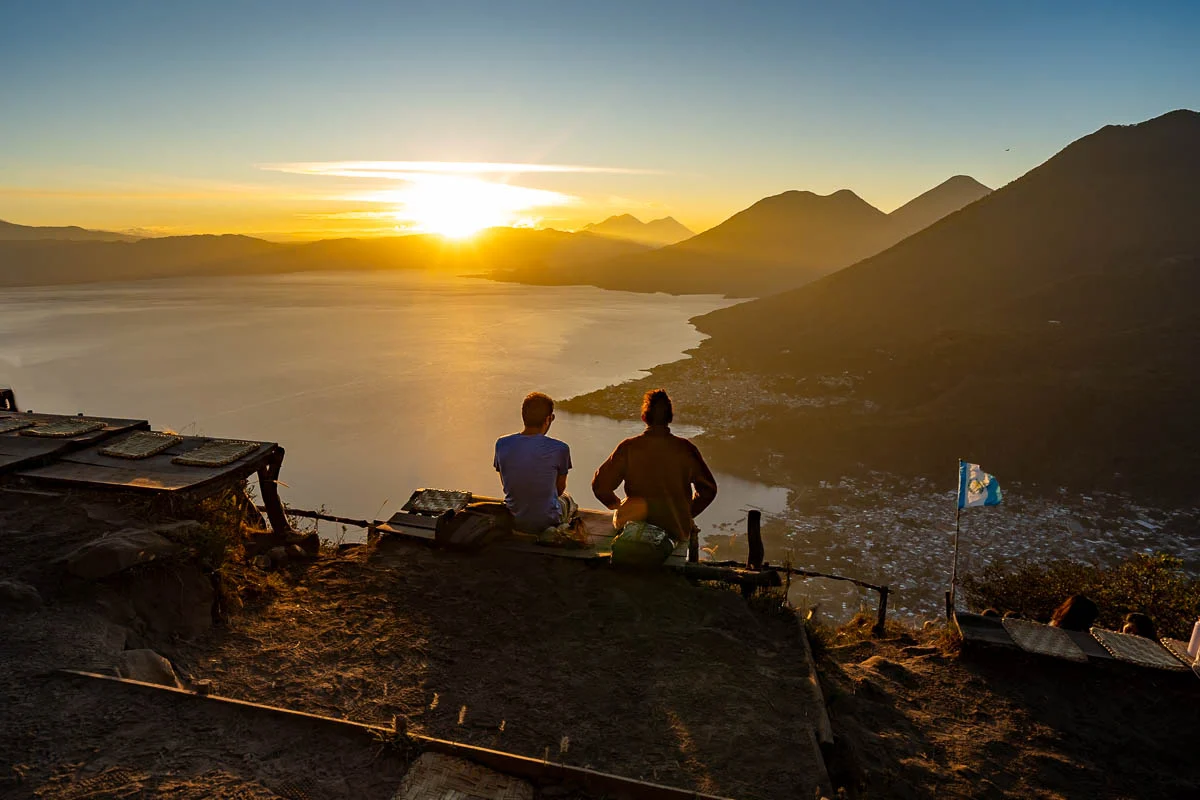
You reach the summit platform just as the eastern horizon shifts from indigo to pale orange. The volcanoes emerge first as silhouettes, then as distinct landforms—San Pedro's conical symmetry, Tolimán's twin peaks, Atitlán's broad flank. The lake below mirrors the sky, and for a few minutes, the world holds its breath. Light spills across the caldera, igniting the water in streaks of gold and rose. You stand at the edge of the platform, the wind cold against your face, and watch the day begin.
All the details about your upcoming adventure in one place
The promontory rises 1,700 metres above Lake Atitlán, its ridgeline forming the unmistakable profile that gave Nariz del Indio its name.
Local Kaqchikel communities have walked this trail for generations, using the summit as a ceremonial site long before the first backpackers arrived in Santa Cruz La Laguna in the 1970s. The path begins in Santa Clara La Laguna, winding through highland forest and cornfields before breaking above the treeline for the final exposed ascent. At the summit, a stone platform faces east across the caldera, framing Volcán San Pedro, Tolimán, and Atitlán in a single panorama that stretches 40 kilometres from shore to volcanic cone.
The Indian nose sunrise hike from Santa cruz gained international recognition in the early 2000s, when guidebook writers began listing it among Central America's premier short treks. Unlike multi-day circuits, this route compresses the region's geological drama into a 90-minute climb, making it accessible to visitors based anywhere along the lake. The trail's popularity has funded a conservation programme managed by Santa Clara's community council, which maintains the footpath and enforces a 30-quetzal entry fee collected at the trailhead gate. That revenue supports reforestation projects on the lower slopes, where native oak and cypress have been replanted to stabilise soil eroded by decades of foot traffic.
The hike itself covers roughly 3.5 kilometres one way, with an elevation gain of 300 metres from the village edge to the summit. Most departures from Santa Cruz involve a pre-dawn boat crossing to Santa Clara, followed by a short walk through the village to the trailhead. The ascent begins gently, passing smallholder plots and wooden shrines before steepening through a series of switchbacks. Stone steps mark the final approach, carved into the ridgeline and reinforced with timber handrails. At the top, the vista extends beyond the volcanoes to the Pacific lowlands, where morning light renders the coastal plain in shades of amber and grey. On clear mornings, the crater lake reflects the sky in near-perfect symmetry, doubling the visual impact of the sunrise.
The trail sees its highest traffic between November and April, when dry-season conditions keep the footpath firm and sunrise visibility peaks. During the rainy months, cloud cover often obscures the volcanoes, though the trail remains passable. Local guides from Santa Clara and Santa Cruz lead most organised treks, offering commentary on the region's volcanic history and indigenous land-use patterns. The route has become a rite of passage for long-term travellers in Guatemala, referenced in hostel logbooks and backpacker forums as a non-negotiable Lake Atitlán experience.

At the summit, a stone platform frames Volcán San Pedro, Tolimán, and Atitlán in a single 40-kilometre panorama.
Wear moisture-wicking layers and sturdy hiking boots with good traction for the steep volcanic soil. Temperatures drop significantly before sunrise, so a windbreaker or thermal jacket is recommended.
Carry only a lightweight daypack containing essentials. Secure your belongings tightly, as there are no lockers or security checkpoints provided at the mountain gate.
Tripods are permitted on the summit but should be compact to allow space for other hikers. Avoid blocking narrow trail sections while capturing images of the horizon.
The trail is generally not recommended for small children due to the strenuous nature of the climb. Guardians must ensure minors remain on the marked path at all times.
The trail is not wheelchair accessible and requires a high level of physical fitness. Uneven ground, loose volcanic rock, and steep inclines characterize the ascent.
Bring at least 1.5 liters of water per person and high-energy snacks. There are no vendors or potable water sources available once you begin the indian nose sunrise hike from santa cruz.
Opening Hours
00:00–23:59
Address
Santa Clara La Laguna, Lake Atitlán, Guatemala
Terrain
Steep and uneven mountain trails
Best arrival window
04:30–06:00
Storage
Not available at trail head
Conservation Fee
30 GTQ per person
Public transport · 1.5 hours · 15-25 GTQ
Take a lancha from Santa Cruz La Laguna to San Pedro, then a local pickup truck to Santa Clara.
Taxi · 45 minutes · 150-250 GTQ
Arrange a private transport from your hotel to the Santa Clara gate.
Cancellations must be made 24 hours in advance to receive a full refund. The 30 GTQ trail conservation fee is non-refundable as it is collected by local land managers.
Recommended time
3-4 hours
A typical indian nose sunrise hike from santa cruz requires several hours to account for the ascent and descent along the trail. By prioritizing an early start, hikers can reach the summit observation deck before peak congestion occurs. Those utilizing indian nose sunrise hike from santa cruz tours should expect higher traffic during the descent, while those booking an indian nose sunrise hike from santa cruz tour independently may find more solitude. Choosing early slots helps minimize time spent behind large groups near the ridge.
Crowd levels through the day
Weather · crowds · average price — dots go green to amber to red as each metric rises.
Expect high humidity and occasional morning cloud cover. October-November
Check cloud forecasts the night before your indian nose sunrise hike from santa cruz.
Hiring a guide for the indian nose sunrise hike from santa cruz ensures safe navigation.
Follow the recommended arrival window to secure a spot for the indian nose sunrise hike from santa cruz.
The 30 GTQ fee for the indian nose sunrise hike from santa cruz is cash only.
Adjust clothing during the indian nose sunrise hike from santa cruz ascent to avoid overheating.
Pack out all waste generated during your indian nose sunrise hike from santa cruz.
Santa Clara La Laguna
Main entrance for the indian nose sunrise hike from santa cruz.
Get directionsThe Indian Nose sunrise hike from Santa Cruz owes its existence to the Tz'utujil Maya, who named the ridge Rupalaj K'istalin—Face of the Sleeper—centuries before tourism reached Lake Atitlán. The profile emerged from their cosmology as a reclining god watching over the highlands. Spanish colonial records from the 1720s mention the peak as a boundary marker between Santa Clara La Laguna and neighboring villages, though no trails were formalized. The ridge remained a local shepherd route until the late twentieth century. Foreign backpackers discovered the viewpoint in the early 1990s, guided by villagers from Santa Clara who recognized an income opportunity. By 1998, informal sunrise tours departed from Santa Cruz La Laguna, a short boat ride across the bay. The trail conservation fee was introduced in 2004 after erosion from unregulated foot traffic threatened the slope's stability. Local cooperatives assumed management, collecting 30 quetzales per hiker and maintaining stone steps along the steepest sections. A 2011 landslide temporarily closed the upper segment, prompting the installation of fixed rope handrails that remain in place today. The hike's popularity surged after 2015 when travel blogs amplified its reputation as Guatemala's premier sunrise trek. Dawn departures from Santa Cruz became standard, with guides meeting groups at the dock by 4:30 to reach the summit before first light. Competition among tour operators drove prices down, but quality varied—some groups exceeded fifty hikers, degrading the experience. In 2019, Santa Clara's community council capped daily permits at two hundred, a limit still enforced. The trail now operates year-round under cooperative oversight, its revenue funding reforestation projects on the ridgeline and school programs in the village below.
Tz'utujil Maya name the ridge Rupalaj K'istalin, honoring its resemblance to a reclining deity.
Spanish colonial documents record the peak as a boundary between Santa Clara and adjacent settlements.
Foreign travelers begin ascending the trail with local guides, establishing the route as a tourist destination.
Santa Clara introduces the 30-quetzal conservation fee to fund erosion control and trail maintenance.
A landslide forces temporary closure; fixed rope sections are installed on the steepest grades.
Community council imposes a two-hundred-hiker daily cap to preserve trail conditions and visitor experience.
Position yourself at the highest point to capture the panoramic alignment of San Pedro, Tolimán, and Atitlán volcanoes rising above the cloud layer. This vantage point requires a steady hand to frame the shifting colors of the sky against the dark silhouette of the lake.
Located slightly below the main peak, this spot offers a foreground interest featuring local ceremonial stones with the vast crater lake in the background. It is a preferred angle for those taking an indian nose sunrise hike from santa cruz to emphasize the cultural significance of the mountain.
This rocky outcrop provides a clear sightline toward the sunrise direction, ideal for capturing the first light hitting the surrounding highlands. It is a standard stop for photographers using indian nose sunrise hike from santa cruz tours to balance the light levels across the horizon.
This area captures the expansive sweep of Lake Atitlán stretching toward the distance, showing the deep blues of the water as daylight begins to fill the caldera. Many who book an indian nose sunrise hike from santa cruz tour prioritize this location for wide-angle landscape compositions.
Planning an indian nose sunrise hike from santa cruz with children requires careful preparation due to the steep terrain and early start. This mountain trek to see the Mayan face silhouette is best suited for families with active, older children who are comfortable with rugged paths.
This trail is unsuitable for strollers or carriers with wheels due to the uneven, rocky mountain terrain. Parents should bring a sturdy hiking pack for younger children who cannot manage the steep ascent independently.
The trail is physically demanding and recommended for children aged 10 and older who possess good stamina. Younger children may find the incline and duration of the indian nose sunrise hike from santa cruz tour challenging without significant assistance.
There are no restrooms, baby-change stations, or running water available on the trail path. Families should utilize facilities in the village of Santa Clara La Laguna before heading to the gate for their indian nose sunrise hike from santa cruz tickets.
The ascent takes significant effort and requires a steady pace to arrive within the 04:30–06:00 arrival window. Plan for frequent water breaks and monitor children closely for signs of fatigue or altitude sensitivity during the climb.
Pack sufficient high-energy snacks and water for everyone as there are no food vendors at the summit. Bringing a light breakfast to eat while waiting for the morning light helps keep children engaged during the indian nose sunrise hike from santa cruz tours.
Dining options directly at the summit are nonexistent, making it essential to prepare meals before your indian nose sunrise hike from santa cruz. Most visitors rely on local cafes in Santa Clara La Laguna for a quick bite after completing the mountain trek.
Located near the trailhead, this spot offers strong local coffee and warm pastries to recover from your indian nose sunrise hike from santa cruz tours. It serves as a convenient stop for breakfast once the descent is finished.
This traditional kitchen provides hearty plates of beans, eggs, and tortillas ideal for replenishing energy after your indian nose sunrise hike from santa cruz tour. The atmosphere is modest and frequented by both locals and early-morning hikers.
The central market area offers fresh fruit and simple snacks perfect for travelers utilizing indian nose sunrise hike from santa cruz tickets. It is best to visit during morning hours when vendors set up their stalls for the day.
Everything you need to know for your journey
The trail is open daily from 00:00–23:59. It is recommended to arrive between 04:30–06:00 to catch the light.
The climb is strenuous and requires good physical condition. It is not suitable for those with mobility issues.
Tickets or fees are collected at the gate in Santa Clara La Laguna upon arrival. Ensure you have the 30 GTQ conservation fee in cash.
Carry water, a headlamp, and warm layers for the summit. Check your gear before beginning the indian nose sunrise hike from santa cruz.
The trail remains open during the rainy season, but visibility may be limited. Use caution on the path if it is muddy.
Yes, there is a 30 GTQ trail conservation fee per person. This is collected at the gate.
Photography is encouraged at the summit. Please ensure your equipment does not impede other visitors.
Most visitors arrive via private taxi or local pickup from surrounding villages like Santa Cruz or San Pedro.
While not explicitly prohibited, the intensity of the hike makes it difficult for young children.
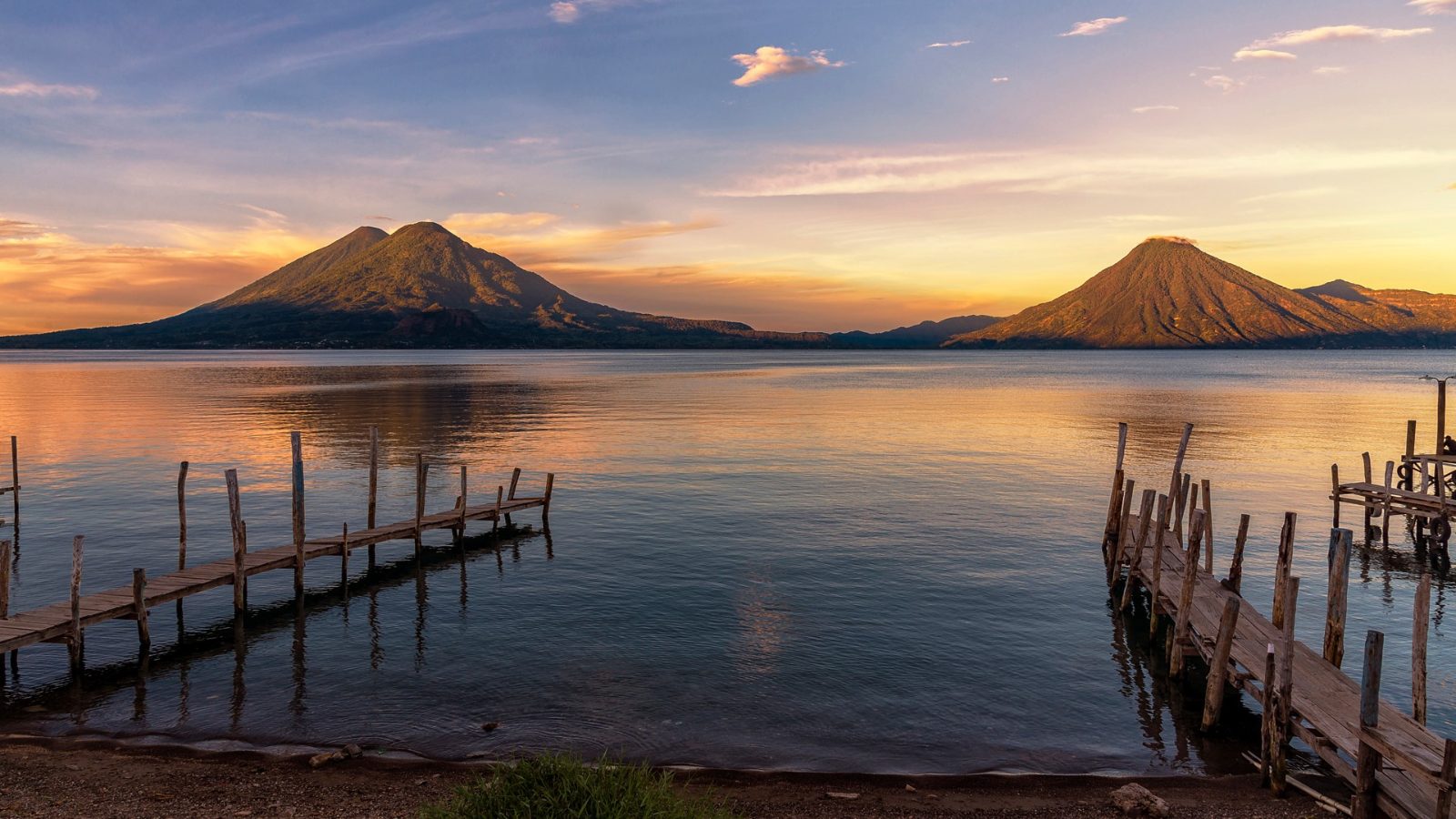
The volcanic caldera surrounding the hiking area. View of the three volcanoes from the shore.
A colonial-style building located in the heart of the village.
A taller, more challenging volcanic peak nearby.
A selection of lakeside lodges with boat access.
Hostels and hotels near the transit pickup points.
Basic lodging options near the trailhead entrance.
Join thousands of happy travelers who have discovered this incredible experience
Book Your Experience Now